Plov (Uzbek Rice with Lamb)
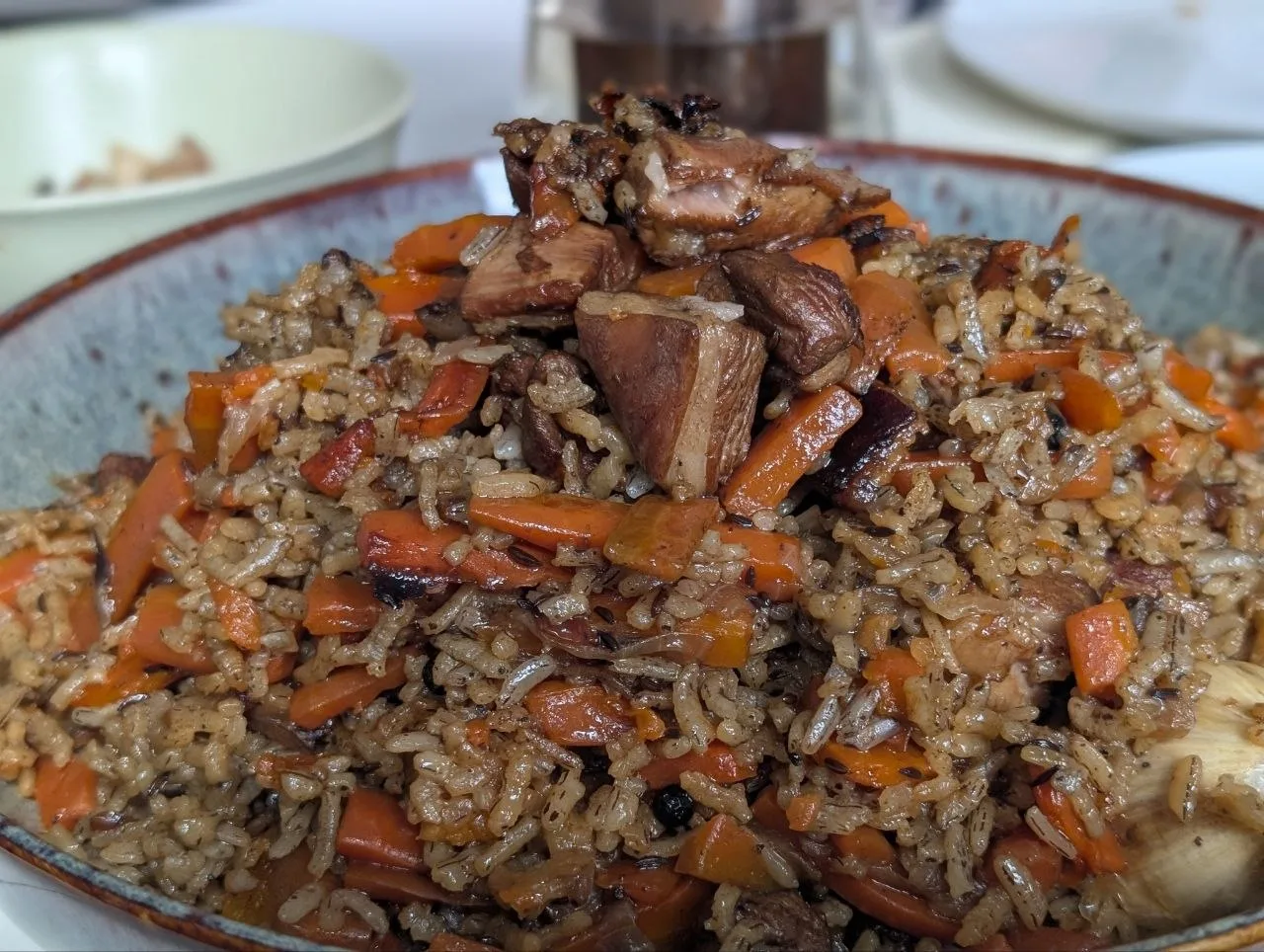
Plov is the crown jewel of Uzbek cuisine — a fragrant, slow-cooked pilaf of tender lamb, sweet carrots, and long-grain rice infused with cumin, barberries, and golden fried onions. Made in a traditional kazan (heavy-bottomed pot), this one-pot dish is deeply satisfying and built on layers of flavor that develop over a long, unhurried cook.
Ingredients
- 600 g long-grain rice (preferably devzira or basmati)
- 800 g bone-in lamb shoulder or leg
- 150 ml cottonseed oil or neutral vegetable oil
- 3 pcs yellow onions
- 600 g carrots
- 2 pcs garlic
- 700 ml water
- 2 tsp cumin seeds
- 1 tsp ground coriander
- 2 tbsp dried barberries (zereshk)
- to taste salt
- to taste black pepper
- 1 pcs dried chili pepper
- 50 g lamb fat (kurdyuk) or extra oil
Instructions
- Soak the rice in warm salted water for at least 30 minutes. Meanwhile, cut the lamb into 4–5 cm chunks, slice the onions into thin half-rings, and julienne the carrots into long matchsticks roughly 5 cm long and 3–4 mm thick. Do not grate the carrots — the texture is essential.
- Heat a large, heavy-bottomed pot (kazan, Dutch oven, or cast-iron pot) over high heat. Add the oil (and diced lamb fat if using) and heat until shimmering and just beginning to smoke — about 200°C. If using lamb fat, render it until golden, then remove the cracklings.
- Add the sliced onions to the hot oil and fry over high heat, stirring frequently, until they turn deep golden-brown — almost caramelized. This step is crucial: the darker the onions, the richer the color of the finished plov. This takes about 10–12 minutes.
- Add the lamb chunks to the pot in a single layer (work in batches if needed). Sear over high heat without stirring for 3–4 minutes until a deep brown crust forms, then stir and brown all sides. Season generously with salt and black pepper.
- Add the julienned carrots on top of the meat in an even layer. Do not stir immediately — let them steam and soften for 3 minutes, then gently fold them into the meat and onion mixture. Fry together for another 7–8 minutes until the carrots are tender and lightly golden.
- Pour in the boiling water to cover the meat and carrots by about 1 cm (approximately 500–600 ml). Add the whole dried chili pepper (if using), 1 tsp cumin seeds, ground coriander, and barberries. Stir to combine. This fragrant broth base is called the zirvak. Reduce heat to medium-low and simmer uncovered for 25–30 minutes until the lamb is nearly tender and the broth is well-seasoned. Taste and adjust salt — the zirvak should be slightly saltier than you'd want to eat, as the rice will absorb the excess.
- Drain the soaked rice thoroughly. Using a slotted spoon, distribute the rice evenly over the zirvak — do not stir. Gently level the surface. Nestle the two whole heads of garlic into the rice, pressing them in slightly. Sprinkle the remaining 1 tsp of cumin seeds over the top.
- Pour the remaining boiling water (about 100–150 ml) over the back of a slotted spoon onto the rice surface so as not to disturb the layers. The water should just barely cover the rice by 1 cm. Increase heat to high and cook uncovered until almost all the surface liquid has been absorbed and the rice looks dry on top — about 10–12 minutes.
- Once the surface liquid is absorbed, use the handle of a wooden spoon to poke 6–8 deep holes through the rice all the way to the bottom of the pot — this allows steam to circulate evenly. Gather the rice into a gentle mound in the center of the pot. Reduce heat to the absolute minimum, cover the pot tightly with a lid (wrap it with a clean kitchen towel for an even tighter seal), and steam on very low heat for 25–30 minutes.
- Remove from heat and let the plov rest, still covered, for 10 minutes. Do not rush this step — the rest allows the rice to finish steaming and the bottom crust (called kazmag) to set. Remove the lid and gently transfer the rice to a large serving platter: first scoop out the rice onto the platter, then arrange the lamb pieces and carrots on top. Place the softened whole garlic heads on top as a garnish. Serve immediately, traditionally with a simple tomato and onion salad and hot green tea.